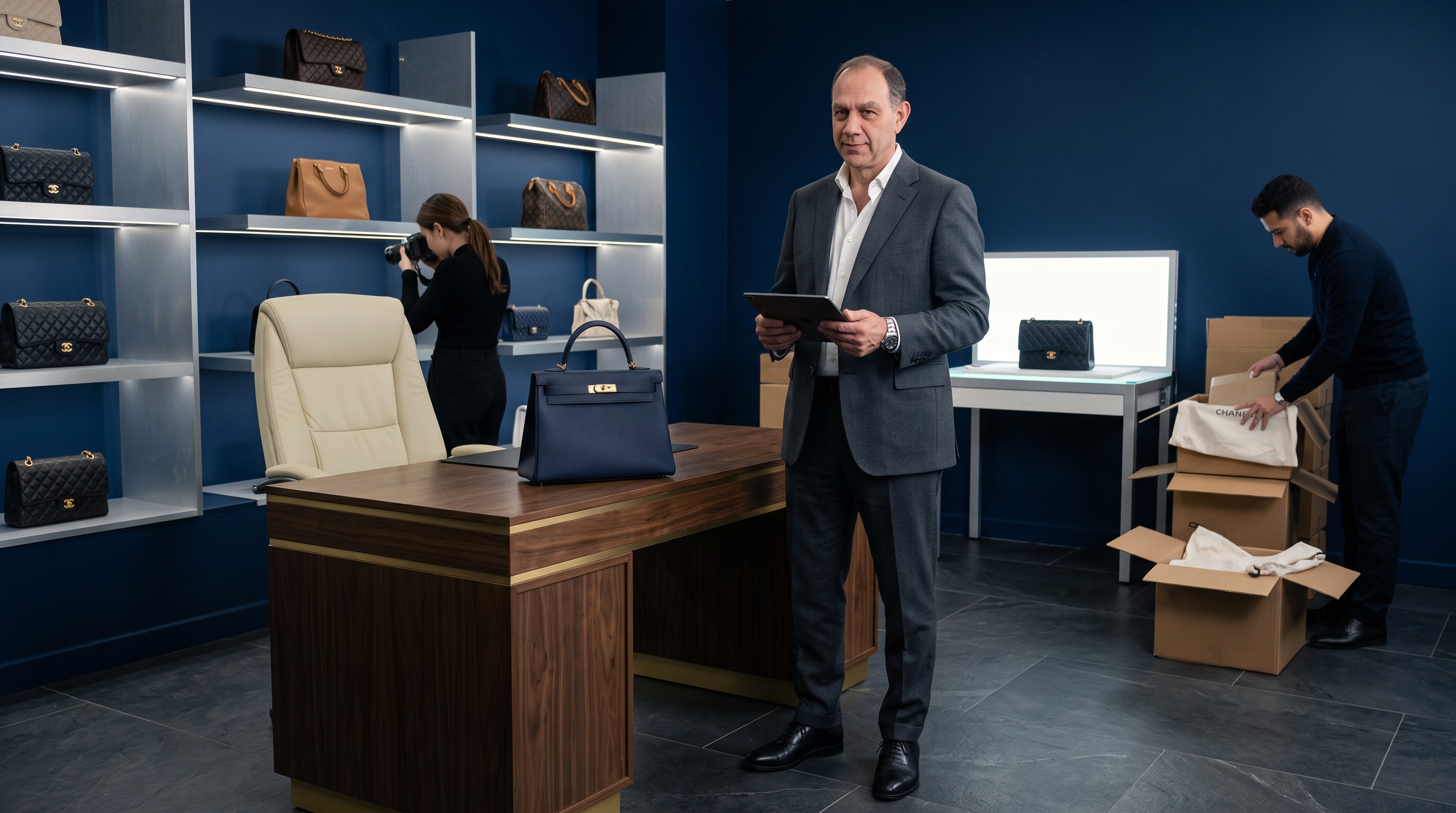
In the luxury bag business, most dealers know their margins by heart. They know what a well-kept classic flap or a structured top-handle bag should sell for, how condition shifts value, and which colorways move fastest. Far fewer know one number that quietly decides whether their growth is healthy or expensive: customer acquisition cost, or CAC.
CAC tells a dealer how much it costs to win a new buyer. In a category where a single sale can carry a strong margin, it is easy to assume acquisition costs do not matter. But as advertising becomes more competitive and buyers become more cautious, understanding CAC has become one of the clearest ways to separate dealers who scale profitably from those who simply spend more.
"Most dealers watch the price of the bag and forget the price of the buyer," says Avi-Meir Zaslavsky, founder of 999Precious. "Every client you win has a cost attached. If you don't know that number, you don't really know whether your business is growing or just getting busier."

What Customer Acquisition Cost Means for Luxury Bag Dealers
Customer acquisition cost is the total amount a business spends on sales and marketing in a given period, divided by the number of new customers acquired in that same period. It measures efficiency: how much effort and money it takes to turn a stranger into a paying client.
For luxury bag dealers, CAC carries extra weight. The product is high-value, the purchase is emotional, and the buyer is usually asking one silent question before anything else: can I trust this seller? That means acquisition costs in luxury resale include not only ads and promotions, but also the work of building credibility, from professional photography to authentication messaging to client communication.
The Basic CAC Formula
The core calculation is simple:
CAC = Total sales and marketing costs ÷ Number of new customers acquired
Here is an illustrative example. Suppose a dealer spends $12,000 in one quarter on paid social ads, product photography, content creation, and a share of sales staff time. During that quarter, the business gains 40 first-time buyers. The CAC is $12,000 ÷ 40 = $300 per new customer.
On its own, $300 is neither good nor bad. It only becomes meaningful when compared with what that customer is worth over time, and with how the number changes from one channel or quarter to the next.
What to Include in Your CAC Calculation
The most common mistake dealers make is undercounting. A realistic CAC for a luxury bag business should include:
- Paid advertising: social media campaigns, search ads, and promoted marketplace listings.
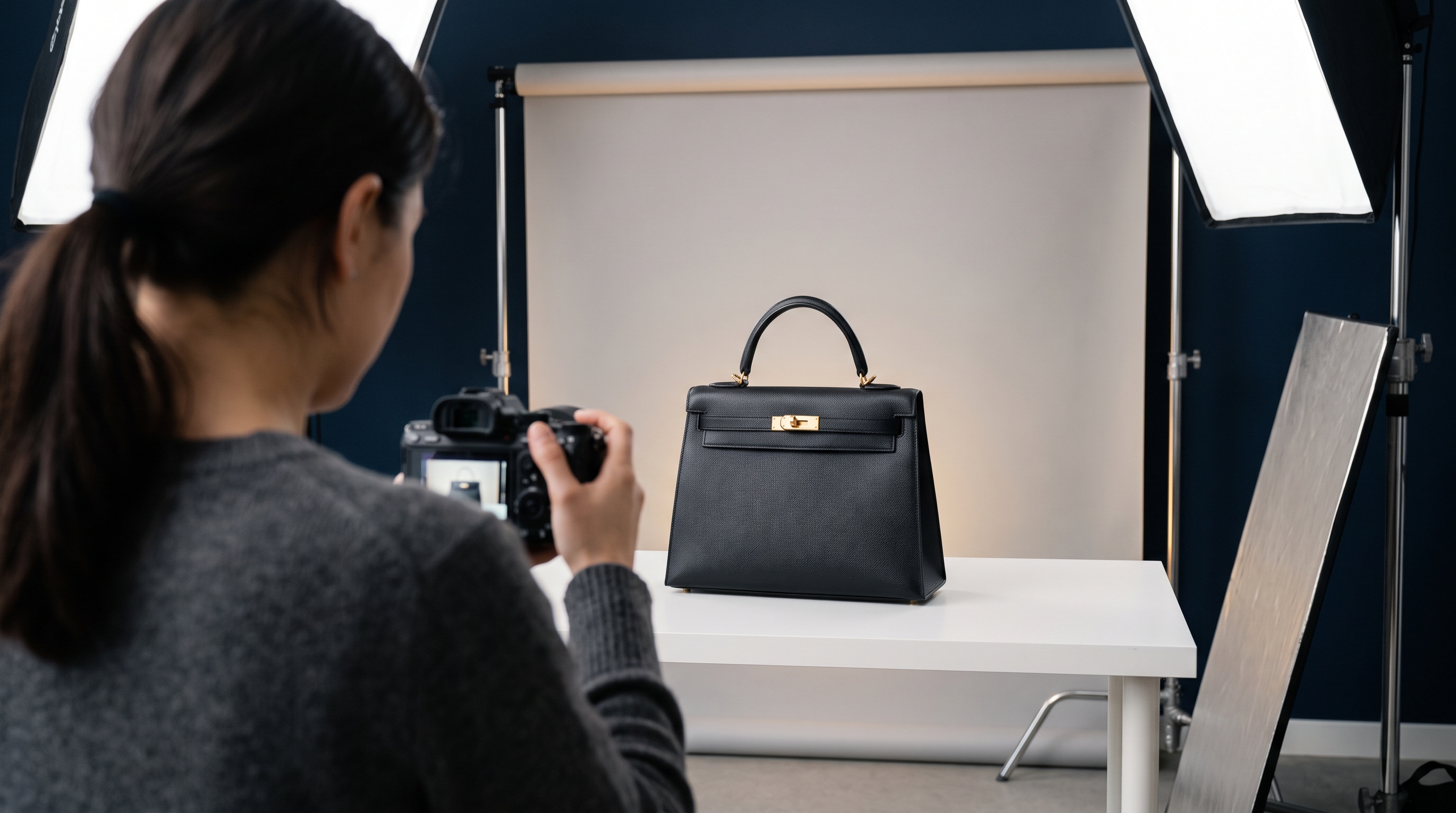
- Content and creative: photography, video, styling, and copywriting for listings and social channels.
- Sales labor: the portion of staff time spent on prospecting, answering inquiries, and closing first sales.
- Partnerships and influencers: fees, gifted product, or commissions paid to bring in new buyers.
- Events and private viewings: venue, hospitality, and preparation costs for client-facing events.
- Tools and software: a reasonable share of CRM, email marketing, and analytics subscriptions.
Costs tied directly to fulfilling an order, such as shipping or packaging, are usually treated as cost of sale rather than acquisition. The key is consistency: define your inputs once and use the same definition every period, so the numbers can be compared honestly.
Blended CAC vs. Channel CAC
A single blended CAC is a useful starting point, but it can hide important differences. A dealer may find that buyers from referrals cost very little to acquire, while buyers from cold paid ads cost several times more.
To calculate channel CAC, divide the spend for each channel by the new customers that channel produced. This requires basic tracking, such as UTM links, unique discount codes, or simply asking every new buyer how they found the business. Once the data is in place, dealers can shift budget toward the channels that bring in buyers efficiently and reduce spending where acquisition costs keep rising.
"The dealers who grow well are the ones who know where their best clients actually come from," Avi-Meir Zaslavsky notes. "Sometimes the channel that looks impressive is the most expensive one, and the quiet channel, like referrals from happy clients, is doing the real work."
Compare CAC with Customer Lifetime Value
CAC becomes truly useful when compared with customer lifetime value (LTV), meaning the total gross profit a customer generates over the entire relationship. A collector who buys three bags over several years and later consigns pieces back to the dealer is worth far more than a one-time buyer.
A widely cited benchmark across many industries is an LTV-to-CAC ratio of roughly 3:1, meaning each customer should generate about three times what it cost to acquire them. It is a reference point rather than a rule, but it offers a useful sense check. If the ratio drops close to 1:1, a dealer is effectively paying to stand still.
Dealers should also watch the payback period: how long it takes for a customer's gross profit to cover their acquisition cost. In luxury resale, where a first purchase can carry a healthy margin, payback may happen on the first sale. When it does not, repeat business becomes essential.
Don't Forget the Supply Side
Luxury bag dealers operate on two sides of the market. They acquire buyers, but they also acquire sellers and consignors, the people who bring in inventory. Many dealers track only buyer-side CAC and overlook what it costs to source quality pieces.
Calculating a separate sourcing acquisition cost, using the same formula applied to sourcing spend and new sellers, gives a fuller picture. Strong inventory often makes buyer acquisition cheaper, because rare and well-presented pieces attract attention on their own.
Practical Ways to Lower CAC
Reducing CAC rarely comes from spending less. It usually comes from building trust faster. Practical steps include clear authentication policies, detailed condition reports, consistent professional imagery, transparent return terms, and responsive communication. Each of these reduces hesitation, which shortens the path from first visit to first purchase.

Retention matters just as much. Every repeat sale is a sale with no new acquisition cost attached. Simple follow-ups, early access to new arrivals, and genuine personal service help turn first-time buyers into long-term clients.
"In this business, trust is the cheapest marketing you will ever have," says Avi-Meir Zaslavsky. "When a client believes in your authentication, your condition grading, and your word, they come back and they bring friends. That changes your numbers more than any campaign."
Conclusion: Know What Every New Client Really Costs
Customer acquisition cost is not just a marketing metric. For luxury bag dealers, it is a direct measure of how efficiently trust is being built and converted into revenue. By calculating CAC consistently, breaking it down by channel, comparing it with lifetime value, and tracking the cost of sourcing as well as selling, dealers gain a clear and honest view of their growth. The businesses that master this number can invest with confidence, while those that ignore it risk scaling their costs faster than their profits.
"Great bags will always find buyers," Avi-Meir Zaslavsky concludes. "The question is what you pay to find them. The dealers who measure that carefully, and invest in trust instead of noise, are the ones who will still be strong when the market gets tougher."